
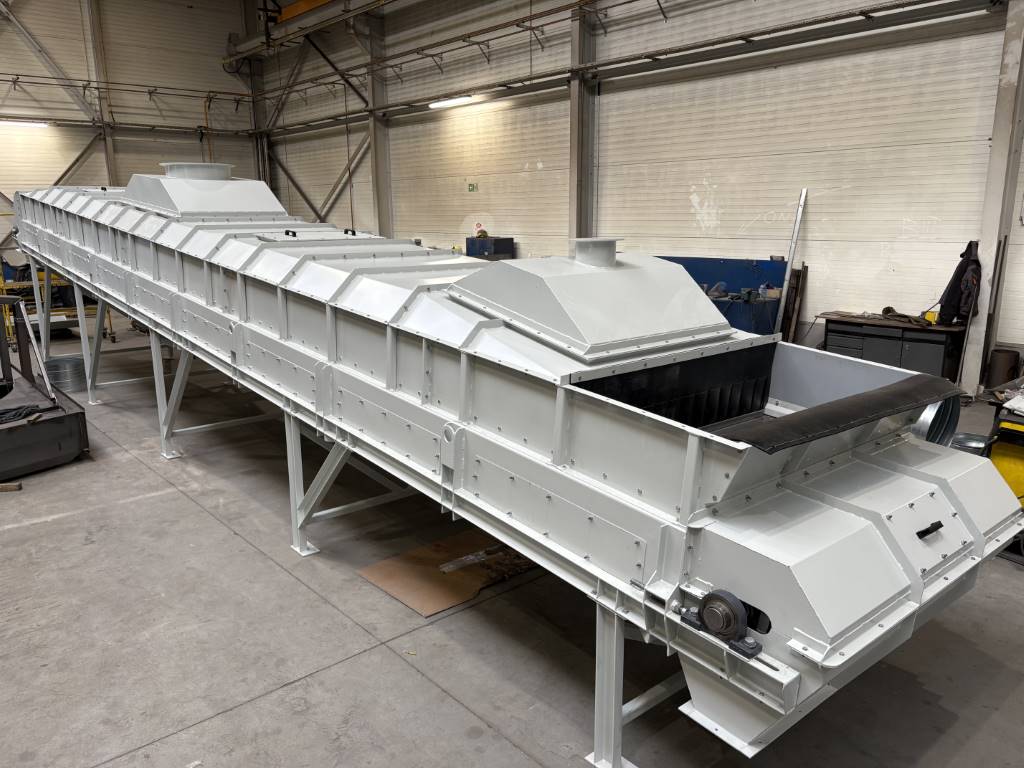
Coolers are process devices designed to lower the temperature of bulk materials after thermal processes such as drying, roasting, calcination, or combustion.
Their primary function is to prepare the raw material for further technological stages in conditions that are safe for both the product and the production line equipment.
How coolers work
The most commonly used cooling medium is atmospheric air, which flows through a layer of material, removing excess heat from it. Depending on the design, cooling can be counter-current, co-current, or cross-current, which allows the intensity and uniformity of the process to be adjusted to the properties of the raw material. In some applications, other cooling media are also used, such as water or process gases.
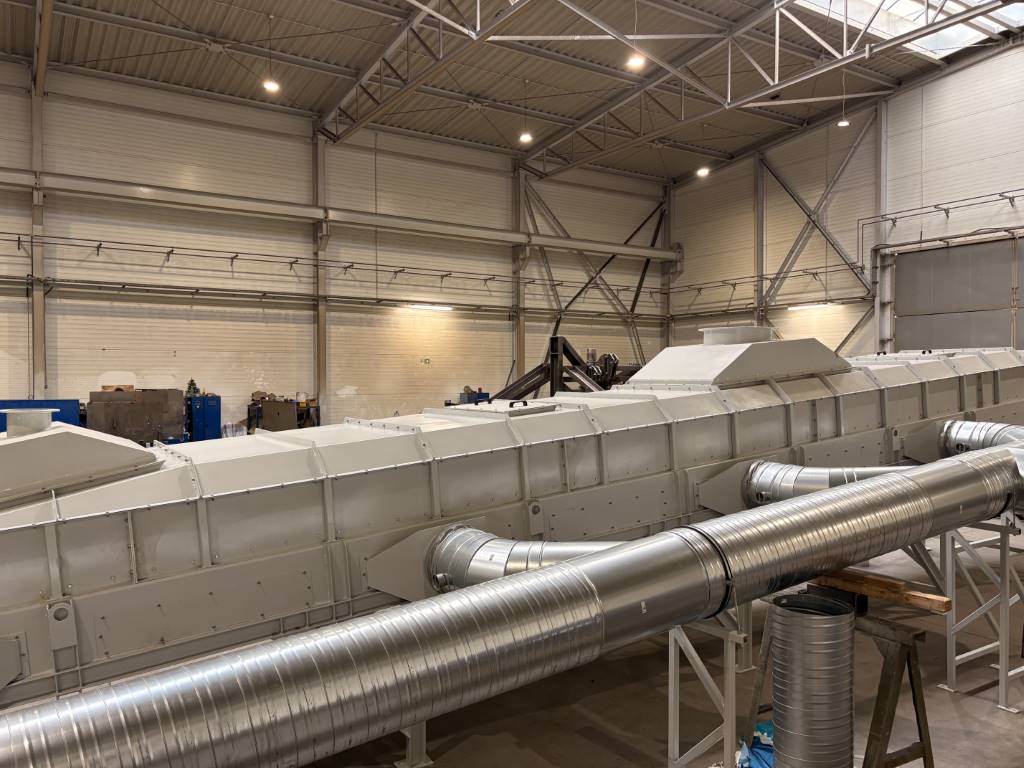
Construction
Coolers can take various forms, from simple rotating drums, through fluidized bed coolers, to belt and plate coolers, which allows them to be used in a wide range of processes and types of materials.
This makes it possible not only to cool, but also to stabilize the physicochemical parameters of products, prevent them from clumping, and prepare them for transport, packaging, or further processing.
Technical parameters
The technical parameters of the devices, their size, and equipment are selected individually in each case based on the technical parameters, available infrastructure, and the investor’s requirements.
We are able to produce any type of cooler.
Advantages of coolers
Durable construction, easy to integrate
The most important advantages of coolers include:
- simple and durable construction
- easy integration with other devices
- low operating costs
- wide range of applications
Projects


Other processes


We shape the future of production
If you are looking for a general contractor for machines or an entire production line, please contact us.
Phone number +48 77 484 42 23
E-mail wakro@wakro.com.pl
Krępna, ul. Zdzieszowicka 51
47-330 Zdzieszowice, Polska